Provides Natural beauty and tranquility to office environments and waiting areas.
Creates a calming atmosphere that reduces anxiety and stress.
Adds unique design potential and entertainment elements to work spaces.
Provides therapeutic medical benefits to Memory care and Alzheimer’s patients.
Encourages creativity and improved productivity in business environments.
Brings warmth, brightness and comfort to institutional settings.
Provides a calming, joyful and fun experience for children.
Offers educational opportunities for all ages.
Dallas Aquarium Experts offer a variety of Aquarium Maintenance Services to keep your fresh water aquarium, saltwater aquarium, or reef tank healthy, thriving, and looking its best. Call us today for a free quote 469-450-3900
At Dallas Aquarium Experts we believe water changes are the most important aspect of aquarium maintenance. Only diet ties with how important water changes are, and they are equally important. You can provide the best food or water quality, but if one is lacking it can undo the highest quality in the other.
There are many vital things that water changes and regular aquarium maintenance can do for the aquarium. Regularly scheduled water changes can actually help save money when it comes to filtration since they can make the use of carbon filtration completely unnecessary. Nothing, absolutely nothing, can make up for a lack of water changes done while performing aquarium service. Filtration can’t do it. Special additives and special types of filtration can’t do it, nothing can replace water changes done while serving an aquarium.
It is important to understand exactly what filtration and water changes do so that you understand the difference. Filters do two main things. First is that they provide a place for the bacteria that consume ammonia and nitrite to grow. The surfaces of bio-medias and the flow of the filter create the perfect submerged habitat for these nitrifying bacteria. The other main function is to physically collect debris and particulates from the water column for the aquarist to remove during regularly scheduled aquarium maintenance at which time the filter media is replaced. It is vital to perform filter maintenance, regardless of the type or brand of filter being used or whether the flow is reduced or not. Water changes maintain water quality long-term.
Aquarium Service
The problem with water changes is that their results are long-term. Many people only see short-term. So if someone stops doing water changes or cuts back drastically (like only doing water changes once every four weeks) they may not see any major difference. The reason is that the problems related to lack of water changes, cause short-term are very subtle. Many people feel it is best to leave well enough alone and not fix what isn’t broken. This idea leads to neglect and the aquarium will suffer.
When inadequate aquarium maintenance or no water changes are done the tank appear to do well. The fish will still be alert and swimming, they will still have colors, and they will still eat. This can go on for a few years. What I have seen happen under these circumstances is called old tank syndrome. This is when the water quality has gotten so bad that all of a sudden effectively every fish in the tank gets sick. I have seen this happen a few times, killing 90-95% of the fish. A sign that this situation may be occurring before it actually kills everything is when new fish are added. Usually a neglected tank’s chemistry will change over time. The pH will drop along with hardness, the water quality is low, and together these can prove fatal to new fish. The fish that experienced it slowly acclimated to the changing water as it slowly happened. New fish are acclimated in less than an hour. This sudden change can shock new fish, resulting in their death with no symptoms of any problems.
Water changes do two things simultaneously. Most importantly they remove all the bad things that build up in the aquarium over time. These things include nitrate, phosphate, growth inhibiting hormones that many if not most fish give off, dissolved organic compounds, and other things. The other things are at least as important, we just don’t have test kits for them (except phosphate). The other major function of water changes is to bring in good things that are used up over time. The end result of all the biological activity in an aquarium is acidification. This uses up the KH in the water. As the KH is used up the pH will decrease. Eventually the pH will crash. There are many other vital minerals and trace elements needed that are replenished with water changes during aquarium maintenance.
Water changes also have a massive impact on stocking. It is an error to discuss stocking without addressing water changes and water quality. Discussing stocking based on tank size alone is not different from simply going by the very common one inch per gallon’ type guides. Experiments have shown that it is the water quality, not tank volume that stunts fish. The volume of the tank has a minimal impact on water quality.
How much, how often:
Water changes should be done on a minimum bi-weekly basis during your regular aquarium service. This frequency gives little time for the chemistry of the aquarium to change significantly compared to the tap water in a freshwater aquarium. Over time the chemistry in an aquarium changes and allowing too much time between water changes allows the tank’s water chemistry to change too much, this means that a larger water change will change the tank’s chemistry too much and stress or even shock fish. The amount changed at each water change should be whatever is needed to keep the nitrate concentration under 20ppm. This means that if a weekly water change of 25% doesn’t keep the nitrate concentration under 20ppm then the amount of water changed every week needs to be increased. Any time the size of the water change is changed it should be done slowly. Smaller water changes allow for more error than larger water changes. For example, if the temperature is not perfect for a 25% water change it may not cause any problems. The same temperature difference with a 50% water change could severely stress the fish.
Water changes can prevent and fix almost any problem:
aquarium service
Water changes are one of the most powerful ways to prevent and treat almost all problems that an aquarist is like to encounter. A healthy water change schedule performed during regular aquarium service can prevent most of the problems an aquarist might otherwise experience. In my experience the health issues that arise in well maintained tanks is almost nothing compared to those that are more neglected, including monthly water changes.
In addition, water changes alone are frequently all that is needed to fix most problems that may arise. Increasing the frequency of water changes when problems do arise may be the only action the aquarist needs to take when fish are stressed (lethargic, clamped fins, refusing to eat, etc.). It is also all that is needed in many cases of a variety of diseases. I have seen case after case of ich, bacterial infections, fungal infections, and others fixed by increasing the frequency of water changes alone, no medications used at all. It is also the main issue when algae problems arise. More or larger water changes are frequently the only change needed to fix algae problems.
You may feel you have enough to remember, do, look out for and worry about, but learning to spot signs of impending problems is better than trying to deal with them later on. Methodical aquarium maintenance need not take longer than an a few minutes a day and an hour every other week depending on your aquariums size. An aquarium service company is the best option if you find you are unable to make this type of time commitment.
There are a number of checks that you should make on a daily and weekly basis.
The first and foremost is a daily temperature check, together with a head count of the fishes. Counting fish is best done at feeding time; they usually congregate to one spot. Locate any absentees and search carefully for missing fish; it may simply not be hungry or sociable, but if it continues to behave this way, or seems off color, then you must assume something is wrong and begin further checks. If the fish is dead remove the body before it decomposes and pollutes the aquarium before other fishes become infected with any disease that may have caused its demise. Of course, the dead fish may not have succumbed to any disease; it may have been harassed to death by other fishes – in which case, be sure to check the compatibility of species before replacing. Nevertheless, it is still vital to remove its body as soon as you discover it, to prevent fouling of the aquarium. Marine fishes are sensitive to any stress or disturbance, so try to use your eyes more than your hands and keep your physical intrusions into the tank to the absolute minimum. If you do not find a fish in the tank, look on the floor, since some aquarium fish are expert escapers.
As the aquarium fish gradually becomes established, the fish will settle down into their natural behavior patterns. If you observe the fishes’ normal activities, you will soon be able to recognize any irregularities that may be early indications of trouble.
Check the pH, ammonia, nitrite and nitrate levels in established tanks weekly intervals. In a newly set aquarium it is a good idea to check the pH more regally. Stabilize the pH by adding buffering materials, but if it falls. Again soon after being adjusted then a water change will be required.
Be sure nitrite level has fallen to a minimum before introducing more fish, and keep it low by adding livestock gradually. In this way you can avoid overloading the biological filtration system. Nitrate levels will continue to rise unless held in check by regular water changes. Man y fishes are tolerant of higher levels of nitrate than invertebrates.
Aquarium Service
If you live in North Dallas, Plano, Frisco, or Lewisville using an aquarium service company like Dallas Aquarium Experts can help you avoid the routine tasks and chores of keeping a beautiful aquarium. Call us today for a free consultation for aquarium service.
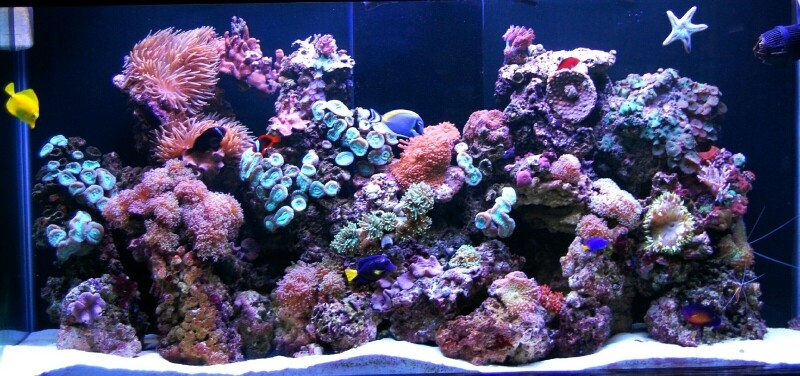
Mini-reef aquariums require high output lighting and multiple water pumps to optimize the health and growth of corals. This often requires a chiller unit to help maintain the proper range of temperatures. Modern in line chillers use a titanium heat exchanger and require a water pump to circulate water through the chiller. The chiller has an internal temperature senor with a digital readout to set the desired temperature and maintain the aquarium within one degree of the set point. In line chillers have a rating in horse power or BTU and manufactures will provide general guidelines to match the size of the chiller, the flow rate and aquarium size to maximize efficiency. You want to oversize the chiller but you do not want to overdo it because that will cause rapid “on/off”cycles of the condenser. While you can use the main circulation water pump, it is easier to use a smaller, dedicated water pump just for the chiller. It is best to place the chiller outside of a cabinet stand to help dissipate the heat.
We at Dallas Aquarium Experts would greatly appreciate the opportunity to become your aquarium service provider. If you feel your aquarium doesn’t look as healthy, pristine, and vibrant as it should please call us and we will provide a free consultation. Contact us today at 469-450-3900 for the best aquarium service in North Dallas and surrounding areas.
Dallas Aquarium Experts – Aquarium Service Company
Avoid buying any new arrivals from your local fish store recently received. If the fish are still in a packing create, that should give you a clue. You should see a large number of bags containing fish floating in the aquariums on the days the store receive new shipments. Most dealers receive new fish at least once a week. Ask your dealer which days these are. A good dealer doesn’t allow customers to purchase fish until there has been sufficient time to quarantine them. This quarantine prior reduces the fish’s stress from shipping and allows the shop’s personnel to treat any disease that shows up in the first few days after arrival.
If you happen to see some fish that catch your eye while they are still in the bags, ask the dealer to hold them for you until a reasonable quarantine period has expired. Most dealers willingly agree to do that. Helpful merchants who take the time to grant such simple requests provide customer satisfaction are defiantly worth patronizing in the future. Stop for a moment and ask yourself one simple question. If I owned the fish shop, would I do this for my customer? If the answer is yes, then you should expect your dealer to do the same thing.
At Dallas Aquarium Experts we quarantine all of our client’s fish prior to delivering them to their new aquarium. Dallas Aquarium Experts the best aquarium service in Dallas, Plano, Frisco and Allen Texas. Call us today for a free estimate on aquarium service.
Aquarium Maintenance and Aquarium Service by Dallas Aquarium Experts
Choose healthy stock and always quarantine all new additions. Be cautious of local fish stores that do not take the time to quarantine their stock before selling it to you. Ask yourself “why would my local fish store tell me to quarantine the fish before putting them into my aquarium, yet not take the time to quarantine a fish before selling it to me.” Especially a fish that most likely has little to no warranty?
Don’t hope to keep all the fishes that you like the look of; bear in mind the size of your aquarium and the compatibly between species.
Remove uneaten food at the earliest opportunity. Acclimatize the fishes to any new food over a period of time – at least several days.
Do not neglect regular partial aquarium water changes using only reverse osmosis aquarium water. Top off evaporation losses in saltwater aquariums with RODI fresh water. Make all necessary water condition changes gradual.
After a period of time, algae will grow all over the tank. This should be removed from the front panel of the aquarium. There is no need to remove the algae from the remaining panels of the aquarium, as the fish will graze on these.
Finally do not regard any of the above as avoidable chores; most of them should be included in the pleasurable side of fish keeping, providing for your fishes the care and attention that they undoubtedly deserve. They will repay you in the best manner possible-by presenting you with a living picture of color and beauty. And remember if you need an aquarium service provider or aquarium maintenance, Dallas Aquarium Experts is the best aquarium service provider in DFW. Contact us today for a free estimate.
Regularly changing a portion of the water in your aquarium can dramatically reduce nitrates, phosphates, DOC’s. It can also correct pH, replenish calcium, stabilize alkalinity, and replenish vital trace elements. I strongly recommend changing 50 to 60 percent of the water every month. You can change half that amount every two weeks, or a quarter of it every week. Your aquarium’s appearance should be your indicator whether to do more or less water change.
A few aquarists, because of their proximity to the ocean, are able to use natural sea water. The majority of us purchase dry saltmix by the bucket. Choosing a synthetic sea salt requires some research, as there are many different brands and formulations. We strongly recommend a reef aquarium specific salts. That is painstakingly formulated to replicate coral reef parameters. Basic synthetic salts may require calcium and magnesium supplements to bring them close to natural sea salt.
To prepare the water you’ll a vat that can hold the volume of water that you will be changing at least 20 to 25% of your aquariums volume, a small powerhead to circulate the water, and an appropriate sized heater to regulate the temperature. You’ll also need a salinity refractometer to measure the salinity. Connect a vinyl hose to the output end of the powerhead to pump the freshly mixed saltwater in to the aquarium.
Contact Dallas Aquarium Experts today for a free consultation for aquarium service!
WATER CHANGES- Serve an important role in your aquarium, yet you either love them, or hate them. We at Dallas Aquarium Experts are in the “love them” camp and when we are designing an aquarium for a client, we’re often asked to make water changes as easy as possible.
The role a water change plays is to export nutrients out of your saltwater aquarium. By removing existing water out of your system and replacing it with fresh saltwater, nutrient levels are reduced and other important levels (calcium, magnesium, trace elements, etc) are increased. Here’s the key thing to note about the reduction of the nutrient levels though: unless a large (50% or more) water change is performed, you’re not going to reduce nutrient levels by a large amount. I often hear people talk about having a high phosphate or nitrate levels and the advice given is to a 10-20% water change. The water change isn’t going to provide the large drop in levels that are needed to maintain proper water quality and keep your aquarium looking its best.
Why even do smaller water changes then if they aren’t useful unless the quantity of water removed is large? Several reasons:
1) When water changes of 20% are done on a weekly basis or 30% are done on a bi-weekly basis this should be sufficient as long as the aquarium is not over stocked and feeding is done appropriately. This will greatly reduce larger issues down the road that are difficult, expensive, and usually slow to correct.
2) Replenishment of elements. Until an aquarium is well stocked with corals, calcium, magnesium and alkalinity levels can be maintained simply through water changes.
3) Promotes good habits. When doing a water change, you have to pay attention to your aquarium as you are turning pumps on/off, removing water, changing filter media, checking fish health, etc. The water change exercise is a great time to look over the aquarium to make sure everything is looking good and running well. Maintaining a weekly water change routine forces you to give your aquarium a good look over which will help catch any problems faster.
Our way isn’t the only way however it is the way that has worked for Dallas Aquarium Experts and our clients time and time again.
Contact us today to schedule your free consultation.
We offer weekly, bi-weekly, and monthly service plans custom-tailored to your aquarium maintenance needs. Many of our customers have come to us after being dissatisfied with the performance of their previous aquarium service provider. Give us 30 days, and we will show you why they are still our customers. Contact us today to schedule a free consultation.
Why Do I Need Professional Aquarium Maintenance Services?
Convenience – You don’t have to worry about cleaning the tank, ordering food and supplies, maintaining critical levels like salinity and Ph, or other time-consuming and sometimes complex procedures. Healthier Livestock – Fish, coral, and other species all then to do better when cared for by professional aquarists. Available Emergency Services – Professional aquarists tend to spot sick fish or poor living environments faster and immediately know what to do to prevent the spread of disease and improve tank conditions.
Aquarium maintenance, like design and building, can be quite the undertaking; however, many aquarium owners aren’t exactly sure how to approach these needs.
At Dallas Aquarium Experts, we are dedicated to making sure you start happy and stay happy. Your aquarium is our passion, which is why we offer a variety of aquarium maintenance services and supplies.
If you would like us to take on the responsibility of maintaining your aquarium, let us apply our expertise with one of our maintenance packages.
Don’t worry if you think that your aquarium service needs are too simple or too complex! No job is to big or small. We service anything from your 5 gallon freshwater tank , 20 gallon nano aquarium, and even a 2500 gallon reef tank!
That means if you need anything from safely moving your tank to a different room or a completely new house to cleaning and maintaining an enormous showpiece, you can trust us to do what needs to be done quickly, effectively, and at the most competitive pricing.
Of course, we understand that not all aquarium owners want or need someone else to take care of their aquatic habitat. Even if you are already familiar with the maintenance needed, you still need the right products and supplies to provide this care. We offer a huge variety of aquarium maintenance supplies in our full online retail store to help you keep your aquatic habitat at its very best.
For the ultimate in convenience and scheduling when it comes to taking care of your aquarium, we offer our customers in the Collin, Denton, and Dallas Counties delivery for their supplies and even food for their fish. Give us a call and let us help you maintain your beautiful tank or pond!
Dallas Aquarium Experts designs packages based on your needs and budget. Please contact us for a free estimate on our aquarium maintenance services or for more information about our services.
If you have an aquarium or fish tank, it can be a beautiful addition to your home or office. The peaceful motions of the fish swimming and the beautiful colors many species have make a gorgeous backdrop to any room. But owning your own aquarium is more than just having a living decorative item; it also includes a responsibility to the fish and other creatures that might inhabit it. In order to maintain and clean a fish tank, you must have knowledge of the biology of the fish and plants that live in it as well as an eye for art in order to make the fish tank look beautiful. Checking the pH levels of the water as well as any chemicals in the aquarium is extremely important, as well as water temperature and cleanliness. These levels can fluctuate, so it is important that you know which levels will be best for your fish, and monitor them accordingly in case they have to be raised or lowered. Having an aquarium is an excellent teaching tool for children, a relaxing thing to look at, and an enjoyable way to own your very own fish and other sea creatures. By making sure your fish tank stays clean and well maintained, you will have many years of enjoyment from your aquarium.
Fish are complex creatures and need special care depending on the type of fish you have. There is also a stark difference in aquarium maintenance and aquarium cleaning needs between a freshwater and a saltwater tank. Be sure you are aware of the differences and make your decision of what kind of tank you want based on the various methods needed to ensure it stays clean and safe for your fish. Before you set the fish tank up, you should perform a process called cycling. This process helps set the stage for healthy water and a healthy environment. Cycling means that you will balance the water levels, make sure the tank is clean and free of any unwanted chemicals such as ammonia, and make sure the water has just the right conditions for both plants and fish before introducing them to the tank. Find out the best ways to clean the gravel, feed the fish, and remove debris and waste from the tank without causing trauma to the fish. It is important to purchase the right treatments needed for either a saltwater or freshwater tank so the levels are correct. Get a good tank thermometer that allows you to monitor the water temperature, and make note of which temperatures your fish prefer in order to thrive. As you clean the tank, you will learn how to perform the task more effectively and how to safely remove the fish so that they are unharmed while you clean it.
Owning a fish tank is a great way to add interest to anywhere you choose. As an aquarium owner, it is important to remember that you are also a pet owner; making sure the tank stays clean is of the most vital importance. With some good research and a full list of supplies you will need, you should have everything required to not only set up a great fish tank, but be able to keep it clean, creating a happy and healthy environment for your fish. Keep a record of the dates you clean the tank so you can continue to regularly clean the fish tank on a viable schedule. Fish tanks do require a good amount of maintenance, but the rewards you reap are well worth it. Ask your local pet stores for some good tips and advice, and if you feel like the process is too complicated, find out what you can do to make the cleaning and maintenance easier on both you and your fish. A clear and clean fish tank will make you happy and will be an excellent feature that everyone will surely appreciate and enjoy.
Common Fish Tank Maintenance Mistakes Made by Novice Aquarium Service Companies
One of the worst mistakes you can make when cleaning your freshwater aquarium is to empty and clean out either the filter or the tank completely. The beneficial bacteria in your tank that help to maintain the nitrogen cycle live on the surfaces of your tank and also in your filter. If you empty out the tank or filter and clean them thoroughly you could kill the entire colony of nitrifying bacteria. When you refill the tank or filter you will be essentially starting over and the tank will have to cycle again in order to re-establish a healthy population of beneficial bacteria. If it becomes necessary to clean your filter, avoid scrubbing the entire thing. A quick rinse with water taken from the aquarium will suffice.
Another common mistake made by novices is to wait too long to clean the tank. Weekly 10% water changes and/or a 25% water change once a month should be enough to keep the water in your aquarium fresh. The best way to do this is through regular aquarium service A larger scale cleaning may become necessary, however, in the event of an algae bloom. If you notice a sudden increase in algae growth in your tank do not wait for the problem to get out of control – take steps to correct the problem then clean the tank before it gets worse. Remove all the decorations from your tank and clean them using 10% bleach solution. Do not clean your filter within seven days of performing this task or you could lose all of the beneficial bacteria in your tank at once. Also, check the water with an aquarium water test kit to determine if there is an excess amount of phosphates.
Everyone gets busy at times, but do not be tempted to replace your routine water changes by simply topping off the tank with fresh water as it evaporates. If you just add more water to the tank without removing any, the water quality in your tank will still deteriorate and your fish may suffer. As water evaporates from the tank it leaves chemicals like ammonia and nitrates behind – and one way to remove these chemicals is to remove some of the water itself and replace it with fresh water. Also, install filter media that specifically targets ammonia and nitrates. Remember, it isn’t just “one thing” that you should be doing to maintain a healthy, clean environment for your fish. Be a smart aquarist and perform a combination of the freshwater aquarium maintenance tasks outlined above on a regular basis and you’ll enjoy a healthy, thriving aquarium!
For all of you who have asked about cleaning fish tanks… Aquarium cleaning is a simple and straight forward task, and should not take very long (Unless you have a particularly small tank or bowl, in which case care can be quite cumbersome and time consuming). The better care you provide for your tank, the healthier your fish will be, the nicer your tank will look and the easier your tank will be to care for in the future.
Fish Tank Maintenance
Don’t I Have to Remove Everything from the Fish Tank when Cleaning?
You should not need to take all the stuff (plants, decorations, etc.) out of the fish tank when you clean it. In fact, I would not recommend it. This just produces extra work for you and creates a large and unnecessary mess. Remember, every surface in the tank will grow some beneficial bacteria that are part of the biological filter. By removing and cleaning the decorations you stress (and may even kill) some of this bacteria, reducing the quality of your filtration until the filter recovers.
What About Removing the Fish when Cleaning the Aquarium?
Similarly, you do not want to remove the fish from the tank when you do your regular 10-15% water change. This, again, is a lot more work on you, and creates an unnecessary mess. In addition, this can be highly stressful to the fish, and is likely to cause physical injuries to your fish.
Aquarium Maintenance
When cleaning your aquarium, you should just remove part (10-15%) of the water and replace it with fresh, dechlorinated tap water (bowls and vases require larger water changes more often). While you are doing this, you should use your siphon to suck up some of the gunk that collects in the gravel and decorations. If you have an under gravel filter, it is very important to clean the gravel when you do your weekly water changes, this will prevent detritus and other decaying organic matter from blocking the passages between the pebbles and restricting water flow. Generally, you can clean 25-33% (1/4-1/3) of the gravel while siphoning out 10-15% of the water.
What About Algae?
If you have algae growing on the surface of the tank or ornaments, you should get an algae scraper of some sort and scrub the glass before removing water. Many varieties of algae scrapers or scrubbers are available at your local pet store. For additional cleanliness, you could get algae eating catfish and/or scavengers to pick up some of this work for you; however, having catfish in the tank does NOT mean that you don’t need to clean. In fact, algae eaters and catfish, like any other fish, will add to the biological load of your tank and increaseaquarium maintenance requirements. (And even those catfish that will eat some algae will not eat much and are unlikely to keep the tank looking clean.)
Dallas Aquarium Experts recommend doing 10-15% water changes once a week for the life of your aquarium. Once you get into this habit, it is not really that much work. Really, it isn’t that much work. Cleaning all the fish tanks in a local pet shop was only a 3 hour job. Doing your weekly water change in your own home aquarium should not take too long.
What If My Filter Is Dirty?
If you have to clean out the filter(s)do not change all the media (cartridges, sponges, carbon packets, etc.) at once, as this will remove the majority of your biological filter, causing the tank to have to go through a cycling period again to get bacteria reestablished. Rinse any new filter media in cool running water before introducing it to the system (unless the instructions for the filter media specifically state not to).
OK, I Have the Old Water Out, Now What?
Once you have siphoned 10-15% of the water from your tank, you will need to fill it again. The easiest and neatest way to do this is to use a siphon to siphon water from a bucket into the tank. This will tend to reduce spilling and messing up the gravel and decorations. Use a bucket that has never had detergents or household chemicals in it (I recommend getting a bucket specifically for use for aquarium chores) and fill it with water. The water should be close to the temperature of the tank water that you just took out (the average person can tell temperature differences within 1/2 degree Fahrenheit or about 1/4 degree Celsius with their hand, so just feel the water to see if it is the same). Use a chlorine or chloramine remover to prepare the water for introduction into the tank. Place the bucket somewhere higher than the top of the fish tank, and get your siphon going again and in just a couple of minutes, you should have a full tank. Be sure to watch the siphon, in case the hose gets bumped out of the tank, or if there is enough water in your bucket to overfill the tank. Remember, there needs to be some space between the top of the water and the aquarium cover, because your fish rely on oxygen exchange at the surface of the water in order to be able to breathe.
What About Topping Off the Fish Tank Between Water Changes?
Do not just “top off the tank” to replace water that “disappears.” This water that is disappearing is evaporating, and it leaves behind all the impurities that were in it to begin with. This means that as you just top off the tank, you are making your water harder until it will eventually no longer be able to support fish.
Additionally, if there are even trace amounts of heavy metals or other toxic substances in the water, you are giving your fish more and more of these every time you top off the tank. Most municipal water systems have at trace levels of at least one potentially hazardous substance, but in minuscule amounts these should never be trouble for you or your fish. Furthermore, by not removing water from the tank from time to time, you allow build up of waste products not removed by the filter (such as Nitrate), which are potentially hazardous to the fish and encourage algae growth.
Usually, if there is significant evaporation between water changes, you are either going far too long between water changes, or there is something wrong with the aquarium setup or equipment that is causing or encouraging evaporation.
 Many Benefits of an Aquarium





 DALLAS AQUARIUM EXPERTS
You must be logged in to post a comment.