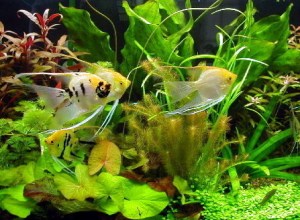
Freshwater Aquariums

The most popular type of aquarium is a freshwater system.  It’s the most practical system for a beginning aquarist for several reasons.

  • A freshwater system is not as expensive to set up as a saltwater aquarium
  • Freshwater fish are generally less expensive than marine fish.  It’s much better to work with less expensive fish when you are just starting out, and still learning the ins and outs of the hobby
  • Freshwater fish are readily available at most aquarium shops and come in a wide variety of colorful species.  Marine fish are much more sensitive to water conditions and don’t tolerate mistakes as easily
  • You can have more fish.  You can keep significantly more freshwater fish than marine fish in the same amount of space.

Dallas Aquarium Experts… Our passion, is your peace of mind!

Water Change Frequency


The more frequent the changes, the less water that needs to be replaced. However, the longer between changes, the more stressful each change potentially becomes, because a larger portion of the water gets replaced. Replacing roughly 25% of your tank’s water bi-weekly is a good minimal starting point, but this may not be enough. The proper frequency really depends on such factors as the fish load in your tank, how much you feed at each feeding and what types of filtration you have. Nonetheless, you should do water changes often enough so that nitrate levels stay at or below 50ppm in fish only systems, and preferably MUCH lower (less than 10ppm is an optimal value) while reef tanks should have a nitrate level below 2 ppm; the change in water chemistry resulting from a change is small. In particular, the before and after pH of your tank shouldn’t differ by more than .2 units. Use a ph test kit or meter the first few times to get a feel for what’s right. If your pH changes too much as a result of a water change, perform changes more frequently, but replace less water at each change. Make sure the water temperature does not fluctuate more than 2 degrees when you perform a water change.

DALLAS AQUARIUM EXPERTS

  • Aquarium Maintenance & Service, Custom Design, and Aquarium Sales in Dallas and the surrounding communities
  • Whether your need is servicing an existing aquarium, or you are interested in a new aquarium setup, we will schedule a free consultation where an experienced professional will meet with you at your home or place of business. We will assess your current situation and devise a plan that will help you move closer to the aquarium you have always wanted.

Benefits and Role of Dallas Aquarium Experts as your Dallas Aquarium Maintenance Company

Aquariums are found in locations other than a home. Many doctor offices, restaurants, schools, hotel lobbies, stores and hospitals include a tank in their décor. The greenery of the plants and the graceful swimming of the fish can produce a calming effect in a room.

Staff in offices and institutions should not be expected to take care of the aquarium, except for feeding the fish, so this is where an aquarium maintenance company could benefit these locations.

Role of an Dallas Aquarium Experts as your Aquarium Maintenance Company

Dallas Aquarium Experts will do the following for our clients

• Counsel the client on all the options for an aquarium system. There are decisions to be made on a saltwater or freshwater tank, size and shape of tank plus how much money the client is willing to spend.

• Set up the aquarium equipment and then supply the fish, plants and decorations.

• Advise client on daily care of the fish and identifying any problems with the equipment, water or fish.

• Service the aquarium on a regular basis and usually once a month at a minimum. The servicing will include testing the water and observing the health of the fish. It also includes regular water changes and cleaning of the tank and equipment.

• Replace fish and plants when required.

• Provide emergency services if equipment fails or if fish show signs of disease.

Benefits of Hiring an Dallas Aquarium Experts as your Aquarium Maintenance Service Company

• Relying on experts to take care of the aquarium can enable people with no knowledge of aquariums to have a tank in their place of business.

• The aquarium and fish will be healthy due to constant monitoring and routine maintenance.

• Even if a client knows how to maintain a tank, there is a matter of finding time to take care of the tank while trying to conduct business.

• If the aquarium system is on a rental contract, everything can be returned to Dallas Aquarium Experts if the client does not wish to renew the contract.

Even homeowners can benefit from hiring an aquarium maintenance company. There are people who need to have the guidance of an expert especially if the aquarium system is expensive. In addition, homeowners can save time by having someone else take care of their tank.

Marine Aquarium Refugium – What and Why….

A refugium is essentially part of a sump, where one purposely grows algae! Macro algae species, such as caulerpa or chaetomorpha are grown in the refugium because they will absorb dissolved nitrates and phosphates from the water and store it internally at a much higher concentration than the natural seawater around them. They effectively remove these harmful substances which in turn keeps the fish and invertebrates healthier. It also helps reduce the growth of algae in the display aquarium since nitrates and phosphates are eaten by the macro algae before the detrimental algae in the display tank has the opportunity to feed upon them.

A refugium is essentially part of a sump, where one purposely grows algae! Macro algae species, such as caulerpa or chaetomorpha are grown in the refugium because they will absorb dissolved nitrates and phosphates from the water and store it internally at a much higher concentration than the natural seawater around them. They effectively remove these harmful substances which in turn keeps the fish and invertebrates healthier. It also helps reduce the growth of algae in the display aquarium since nitrates and phosphates are eaten by the macro algae before the detrimental algae in the display tank has the opportunity to feed upon them.

In addition a refugium also houses invertebrates such as copepods and amphipods which are food for many reef fishes. Because there are no predators in the refugium these beneficial crustaceans will reproduce and thrive. They will make their way back up to the display aquarium through the water column where they will serve as another food source for the fish and coral.

Dallas Aquarium Maintenance Consultations – Dallas Aquarium Experts

Consultations

We have extensive knowledge and experience and can offer advice, recommendations, and assistance in a variety of circumstances and situations. We can be of assistance if you’re considering upgrading to a bigger tank, downgrading to a smaller one, switching from freshwater to saltwater, etc. Or, if you would simply like a sit-down with an expert for some pointers and help with your current tank, we can certainly help with that as well.

DALLAS AQUARIUM EXPERTS

Aquarium Maintenance & Service, Custom Design, and Aquarium Leasing in Dallas and the surrounding communities

Contact us today to schedule your free consultation

Whether your need is servicing an existing aquarium, or you are interested in a new aquarium setup, we will schedule a free consultation where an experienced professional will meet with you at your home or place of business. We will assess your current situation and devise a plan that will help you move closer to the aquarium you have always wanted.


Call us at (469) 450-3900

Stocking a Reef Tank – Dallas Aquarium Maintenance

In order to set up a saltwater reef aquarium the first thing you need to do is make sure it is ecologically balanced. This will help to retain the natural beauty of the ocean because that’s what you are recreating in your home or office. If you overstock the aquarium by putting too many fish in it or add too much variety, it will undermine the eco system you are trying to create. Keep reading to find out all you need to know about stocking the aquarium correctly.

There is no exact science that dictates exactly how to stock the saltwater reef aquarium, but there are general principles that can be followed to make sure it all works out properly. The first factor to be considered is the size of the fish, large fish will occupy more space, eat more and make more waste matter.

With this in mind, the general rule of thumb is 2 inches of fish to every ten gallons of water if the fish are small to medium in size. For the larger fish, go with 1 inch of fish to every 10 gallons of water. For example, you can stock an 80 gallon tank with 16 inches of small fish or 8 inches of large fish.

Dallas Aquarium Maintenace Service Company – Dallas Aquarium Experts

Dallas Aquarium Experts offers many different plans available to help us help you keep your Aquarium in top shape, with clean, beautiful, and healthy fish.  We can schedule your cleaning visits on a weekly, bi-weekly, or monthly basis, as needed to keep your Aquarium properly maintained.

Initial Setup and Installation

Dallas Aquarium Experts offers fast, friendly, and professional setup and installation of your brand new Aquarium!  We will take care of placing the aquarium where you desire, advising on placement of the aquarium, installing the filtration system, lighting system, gravel and decorations, and starting the water cycling process, so that your aquarium will be ready for tropical fish in no time

Special Filtration Needs / Design

Dallas Aquarium Experts can help you decide which type of filtration is needed for your aquarium, and also install and maintain it for you!  There are many different types of filtration, from sponge to power filters to wet/dry sump setups, so let us choose the right filter for your aquarium to help keep your fish healthy and happy!

Aquatic Life Maintenance

Dallas Aquarium Experts specializes in Aquarium Maintenance in Dallas.  Have you always wanted a beautiful aquarium in your home or office, but you don’t seem to have the time or patience to keep up with the necessary aquarium maintenance?   We specialize in keeping your aquatic environment clean!  We have professional services to clean your glass or acrylic, clean and siphon your gravel bed, clean and replace filter cartridges or media, clean your glass tops, and perform the correct amount of water transfers to ensure that your fish will be healthy and their home clean.  We also test your water on a regular basis to help prevent any problems in the aquarium!

Contact Dallas Aquarium Experts today to schedule your free consultation

Whether your need is servicing an existing aquarium, or you are interested in a new aquarium setup, we will schedule a free consultation where an experienced professional will meet with you at your home or place of business. We will assess your current situation and devise a plan that will help you move closer to the aquarium you have always wanted.


Call us at (469) 450-3900

Email us at: sales@dallasaquariumexperts.com

Red Slime Algae… Dallas Aquarium Experts can help!

Red Slime Algae

The reddish pink algae you are seeing may be either bad (cyanobacteria) or good (coraline algae) depending on its texture. Coraline algae often forms in areas of high light and is very hard to remove without the use of a razor blade. It can be pink, purple or red in color and grows in circular patches with the patches expanding as it forms, and is a good algae to have growing. Although sometimes it will grow in spots that is undesirable and needs to be scraped off every once in a while.

 If the algae is more slimy in texture and comes off in sheets or strands when you scrape it then you may just have some cyanobacteria or red slime algae forming. This is common to see towards the bottom of the tank and grows especially well in areas of low water movement. Having this grow around the edge of your gravel is normal and simply needs to be cleaned off when it starts to get noticeable. The only time that red slime algae is bad is when it grows out of control and starts smothering other inhabitants of the tank.

Red slime algae grows in water with a high nutrient load. Most of the waste products produced by the inhabitants of your tank are more dense then the water and form along the bottom increasing the chance for this algae to grow in these areas. There is also less of a water flow towards the bottom and sometimes simply placing a powerhead down near the bottom can keep this algae from growing in a system.

The brown you are seeing is also a form of algae. All forms of algae are a water quality issue. Most people do not want to hear that they are having a water quality issue but if you have any undesirable algae blooming in your tank and especially if it seems like a cause for concern then there is a water quality issue going on. All algae have certain nutrients that they need to thrive. Most of these nutrients are wastes products of the natural processes going on with the inhabitants of the tank. Simply testing your water does not give any indication of what may or may not be wrong. Algae utilize ammonia, nitrite, nitrate, phosphate and various other components typically found in a tank. When you measure these variables in your water you may get a reading of zero and think there is nothing wrong with your water. But the fact remains that if algae are growing then there is a high enough concentration of these nutrients in the water to promote their growth and the water you are testing is not showing evidence of this due to the fact that the algae are taking up these nutrients to use for their own growth. Essentially you are testing your water after the algae have taken the compounds out of the water column and they are what is keeping your levels in a healthy zone.

The simplest way to rid a tank of any undesirable algae is to reduce the dissolved nutrients in the water. This can be done by doing more frequent partial water changes, utilizing or refreshing activated carbon in your filter, not overstocking or overfeeding, cutting back on feeding, raising the pH and the alkalinity, cutting back on light(if possible)and limiting the amount of any trace minerals you are adding to the water. Saltwater tanks grow algae and in small amounts are perfectly normal and no cause for alarm. Having no algae at all is not impossible but very difficult for the average person with the average equipment to achieve.

Aquarium Maintenance, Fish Tank Cleaning, or simply call it Cleaning your Aquarium…Nothing is more important in aquarium keeping than water quality management. There are many excellent products available out there to assist in water quality management, but in our opinion, there is still no replacement for water changes, good filtration, and good feeding habits…. The best way to make sure your aquarium is consistently maintained is by using Dallas Aquarium Experts the best in Dallas Aquarium Maintenance.


CONTACT US TODAY FOR A BETTER AQUARIUM TOMORROW

Schedule a free consultation with Dallas Aquarium Experts today and service professional will come to your home or business and access your current situation. Before you make your decision on an Aquarium Maintenance Company in Dallas, allow us the opportunity to provide you a free consultation regarding your current Aquarium or we can provide an estimate on a new aquarium set-up and aquarium maintenance. Your fish will reward you with their natural beauty and years of enjoyment.


Contact us at (469) 450-3900

Aquarium Maintenance in Dallas – Dallas Aquarium Experts


DALLAS AQUARIUM EXPERTS


Aquarium Maintenance & Service, Custom Aquarium Design, Aquarium Installation & Set Up, and Aquarium Sales in Dallas and the surrounding communities


Aquarium Maintenance

A tank will only survive for so long without regular, thorough maintenance. Regular water changes and cleaning are vital to the health of your fish. All of the maintenance routines discussed below should become second nature after a while, but it is a good idea to schedule the weekly and monthly tasks on your calendar, just so you don’t forget them or put them off for too long. If you leave too much time between water changes or cleanings, the damage may be irreversible.

First of all, there are some supplies you will need for cleaning your tank. This equipment should be used for tank cleaning only and not for any other household chores. Using the same bucket for tank cleaning as for washing your car, for example, could eventually mix some soap or chemical residue into your tank water and quite likely kill your fish. A minimum of two buckets should be set aside for use in aquarium maintenance. These buckets will be used for water changes, gravel washing, treating sick fish or acclimating new fish, and many other cleaning-related activities.


Dallas Aquarium Experts recommended – Daily Maintenance


  • Take advantage of your daily feeding time to check a few things in your tank. First, look at your fish. Take at least a few minutes to observe them each day. Get to know their appearances as well as their behaviors. Once you become very familiar with your fish, it will be easy for you to notice any changes that could indicate a problem


  • Check the temperature of the tank every day to make sure it is at an appropriate level and the heater is functioning properly. As long as the temperature stays within a range of 3 or 4 degrees, your fish should do just fine, but if it is varying more than that, you will want to inspect your heater and perhaps consider purchasing a new one. Another good idea is to touch the tank with the back of your hand any time you are near it, just so you can immediately recognize an extreme temperature change.


  • Checking the filter should be another part of your daily maintenance routine. Many filters will run reliably for years and years, but at any time, a problem can arise. Make sure the filter is still running and that the water is flowing at the same rate as usual. A filter that is partially clogged or has stopped running altogether will immediately begin to put the health of your fish at risk.


Dallas Aquarium Experts recommended Weekly Maintenance


Several tasks should be performed on a weekly basis, if possible. These include water changes, glass cleaning, and vacuuming.


  • Dallas Aquarium Experts recommended Water Changes

One of the most serious problems a fish tank will encounter is waste buildup. In the wild, waste will quickly disperse throughout the water, but in a tank, waste can quickly accumulate. Waste buildup is a problem because it can make a tank appear dirty, but it also brings a much more serious problem: ammonia. This substance is produced by fish and by the bacteria that break down waste, uneaten food, and other things in the water.

One way to keep debris buildup to a minimum is to conduct frequent water changes. Regular, partial water changes are unequaled in their ability to keep a tank fresh and your fish healthy. Fish are constantly producing waste (urine, feces, and other wastes, such as ammonia), and in a tank, this waste has nowhere to go. In a dirty tank, fish are forced to intake these wastes through their gills every time they breathe.

Recommendations on how much water should be changed during each water change vary greatly, from 10 percent to 50 percent.

A water change can be simple or more complicated, depending on the method you choose. The tried-and-true bucket and hose method is probably the easiest and most popular. To use this method, simply place a bucket lower than the aquarium and use some tubing to siphon water from the tank into the bucket.

There are also water-driven changers that avoid the danger of spilling a bucket of water all over the floor. These changers use the flow of water from the tap to create suction in a tube. When the appropriate amount of water has been taken out of the aquarium, the flick of a switch allows water to flow from the tap back through the tubing and into the aquarium. Remember to always make sure that the replacement water is the same temperature as the water that was removed to avoid shocking your fish.

  • Dallas Aquarium Experts recommended Glass Cleaning

Cleaning algae off of the glass once a week will keep your tank looking clean and make for easy viewing of your fish. Keep in mind that algae is not a bad thing, when confined to the glass, so it is a good idea to clean only the panes of glass that you use for viewing and clean any others less frequently. Glass cleaning will be performed with a scraper made of metal or plastic blades or an abrasive pad. Work slowly and smoothly, being careful not to scratch the tank.

  • Dallas Aquarium Experts recommended Gravel Vacuuming

Some hobbyists do not vacuum the gravel ever time they change the water, but a good vacuuming once a week is highly recommended. Keeping the gravel free of detritus will allow the filter to function more efficiently. To vacuum the gravel, use a siphon with a gravel tube on the end, plunging the tube into the substrate. As the gravel is lifted partway up the tube, dirt particles (including uneaten food and feces) are sucked up and out of the tank, and then the gravel is dropped back to the bottom of the aquarium.


Monthly Aquarium Maintenance


  • Dallas Aquarium Experts recommended Filter Cleaning

Bio-filters can become clogged with debris, preventing a smooth flow of water. A gentle rinsing with water from the tank at its normal temperature should be sufficient to clear the filter of any clogs.


  • Dallas Aquarium Experts recommended Cover Glass Cleaning

Whether you have a glass top or a hood top on your tank, any tank cover will require a regular cleaning. The outside will be dusty, and the inside will have accumulated calcium deposits and algae, particularly near the light. It is especially important to clean the cover regularly if you’re keeping live plants in the tank, as buildup will significantly reduce the amount of light reaching the plants


Schedule a free consultation with Dallas Aquarium Experts today and service professional will come to your home or business and access your current situation. Before you make your decision on an Aquarium Maintenance Company in Dallas, allow us the opportunity to provide you a free consultation regarding your current Aquarium or we can provide an estimate on a new aquarium set-up and aquarium maintenance. Your fish will reward you with their natural beauty and years of enjoyment.


• Call us at (469) 450-3900

Old Tank Syndrome

How to prevent Old Tank Syndrome


Many aquarists find out they have Old Tank Syndrome only when they try to introduce new fish to their aquarium. Existing fish may have been able to adjust slowly to the declining water quality but, to new fish, these poor conditions are a shock to the system, often causing them to succumb to weakness and disease.

If you think your freshwater aquarium demonstrates signs of Old Tank Syndrome, test your water right away. You can easily prevent nitrate buildup through regular water changes. If nitrate levels are high (above 60 ppm), perform a series of small water changes (no more than 25% per day) until it is lowered to acceptable levels (< 50 ppm). These water changes will also replenish lost carbonate ions (buffers) to help stabilize pH and create a healthy living environment.

Rather than combating the effects of Old Tank Syndrome, practice proper aquarium husbandry and perform routine maintenance. Insist upon regular aquarium maintenance, especially regular water changes and water testing.


DALLAS AQUARIUM EXPERTS

Aquarium Maintenance & Service, Custom Aquarium Design, Aquarium Installation & Set Up, and Aquarium Sales in Dallas and the surrounding communities


CONTACT US

Schedule a free consultation where a reliable and professional service technician will come to your home or business and access your current situation. Before you make your decision on an Aquarium Maintenance Company in DFW, allow us the opportunity to provide you a free consultation regarding your current Aquarium or we can provide an estimate on a new aquarium set-up and aquarium maintenance. Your fish will reward you with their natural beauty and years of enjoyment.


• Call us at (469) 450-3900


• Email us at sales@DallasAquariumExperts.com